Flexible packaging comparison
TIJ vs thermal transfer coding
Thermal inkjet and thermal transfer can both produce high-resolution variable data, but they need different surfaces and packaging-machine motion.
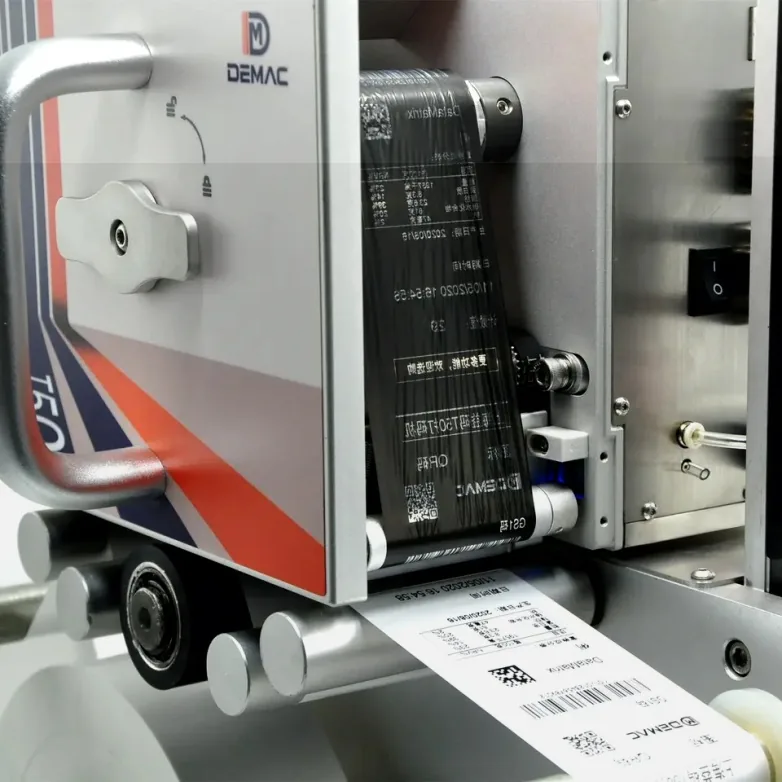
Thermal inkjet and thermal transfer can both produce high-resolution variable data, but they need different surfaces and packaging-machine motion.
Thermal inkjet uses a cartridge printhead close to the moving pack. Thermal transfer overprinting uses a heated printhead and ribbon against flexible film, normally as part of a packaging machine. The right choice is often decided by where the code is applied: a flat finished pack or carton on a conveyor, or the packaging web before it is formed and sealed.
| Factor | Thermal inkjet (TIJ) | Thermal transfer overprinting (TTO) |
|---|---|---|
| Typical print point | Carton, label, sleeve, tray or controlled flat panel. | Flexible film web on VFFS, flow-wrap or pouch machinery. |
| Consumable | Ink cartridge incorporating the nozzle plate on many systems. | Ribbon matched to the film construction and print duty. |
| Product movement | Usually triggered by a photocell and synchronised by fixed speed or encoder. | Intermittent or continuous printer motion must match the host packaging machine. |
| Print area | Built from the selected head width and number of heads. | Defined by printhead width and the available intermittent or continuous print window. |
| Main application risk | Excessive throw distance, unstable pack position or unsuitable ink chemistry. | Wrong motion type, ribbon/film mismatch, poor registration or insufficient print window. |
| Changeover | Job, cartridge, head position and product guidance. | Job, ribbon, film, registration, printhead position and host-machine settings. |
TIJ is a strong starting point when cartons, labels, sleeves or flat product panels pass a fixed printhead at a controlled gap. It can support high-resolution text and machine-readable codes where the cartridge is approved on the actual surface.
TTO is usually assessed where the packaging machine presents flexible film before forming, filling or sealing. Intermittent and continuous modes are not interchangeable preferences; they depend on whether the web stops or keeps moving during the print cycle.
For TIJ, record the approved message, resolution, ink coverage, purging or wiping losses and usable cartridges. For TTO, record ribbon width, message dimensions, pitch, ribbon-saving settings, start-up waste and rejected film. Both calculations should include operator time and production lost during consumable changes.
Use the same smallest text, barcode or 2D code and the same acceptance method. Check contrast, edge definition, quiet zones, distortion and rub resistance.
Confirm job creation, date rules, external data, user permissions, field validation and the response to missing or duplicate records.
Define printer-ready, print-complete, ribbon or cartridge low, fault, line-stop and restart states with the host machine.
For verified T30 and T50 thermal transfer information, see the Lancing thermal transfer overprinter page. Keep the final comparison tied to the exact film, message, host-machine cycle and acceptance test.
Film or pack construction, coating, print side, colour, treatment, storage and contact after printing.
Continuous conveyor, intermittent dwell or moving web; speed range, cycle, registration and available mounting space.
Maximum print width and length, full variable data, barcode type, smallest element and inspection requirement.
Send film, pack samples and host-machine details to compare the two routes.
Review TIJ or TTO suitability