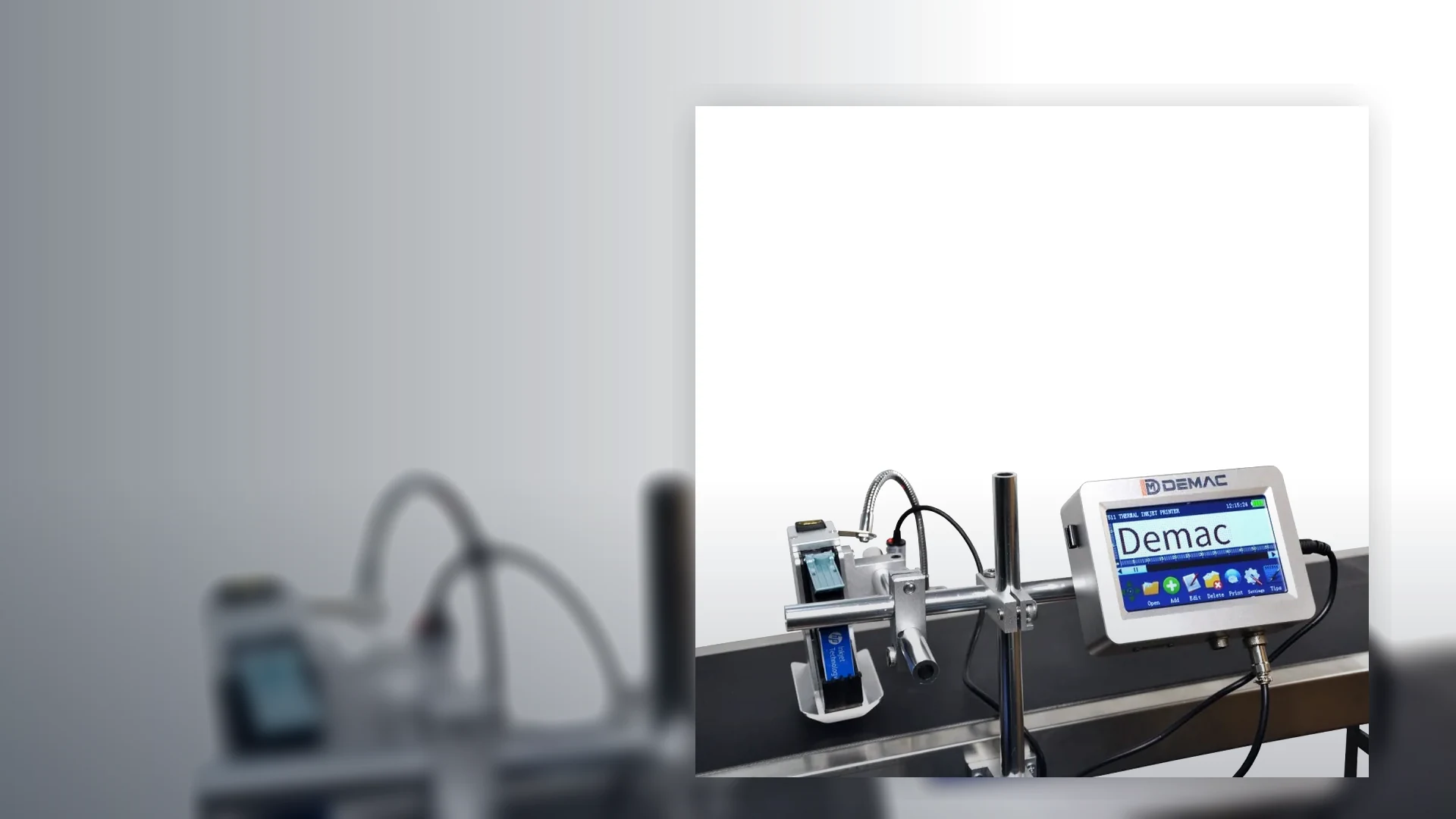
Bottle coding machines
Print expiry dates, batch numbers and traceability codes onto plastic bottles, glass bottles, jars, tins and small containers.
View details →TIJ printers use replaceable ink cartridges and are often selected where crisp text, barcodes and QR codes are required on cartons, sleeves, labels and flat packaging surfaces.
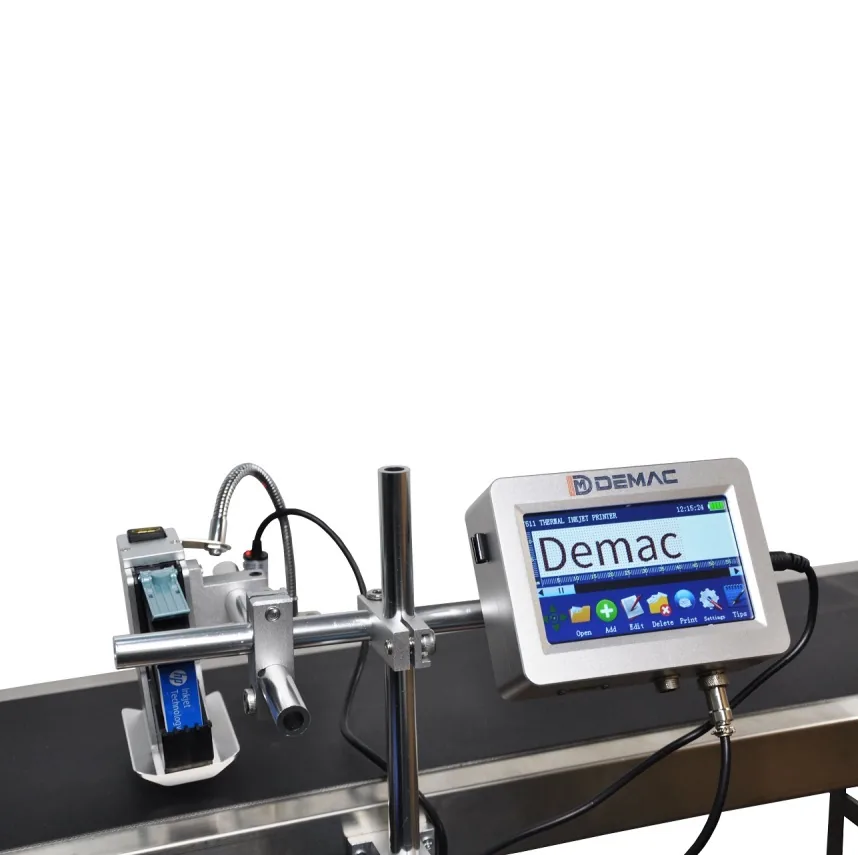
Before buying a coder, confirm the pack surface, speed and code requirement. The same date code can need a different machine depending on whether it is printed onto a curved bottle, carton, flexible film or outer case.
| Common uses | Date code, batch code, QR code, barcode, logo, traceability text |
|---|---|
| Typical products | Cartons, labels, sleeves, flat bottles, tubs, trays, pouches and boxes |
| Line integration | Mounting rail, product sensor, encoder, controller and optional reject verification |
| Selection data needed | Surface type, required resolution, print height, print distance, speed and cartridge choice |
Print expiry dates, batch numbers and traceability codes onto plastic bottles, glass bottles, jars, tins and small containers.
View details →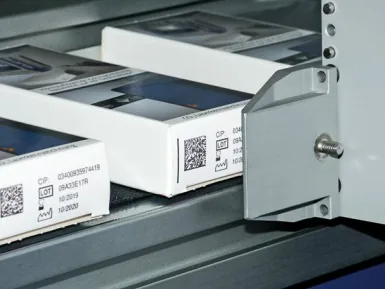
Inkjet printers for retail cartons, shelf-ready packaging, shipping cases and end-of-line case marking.
View details →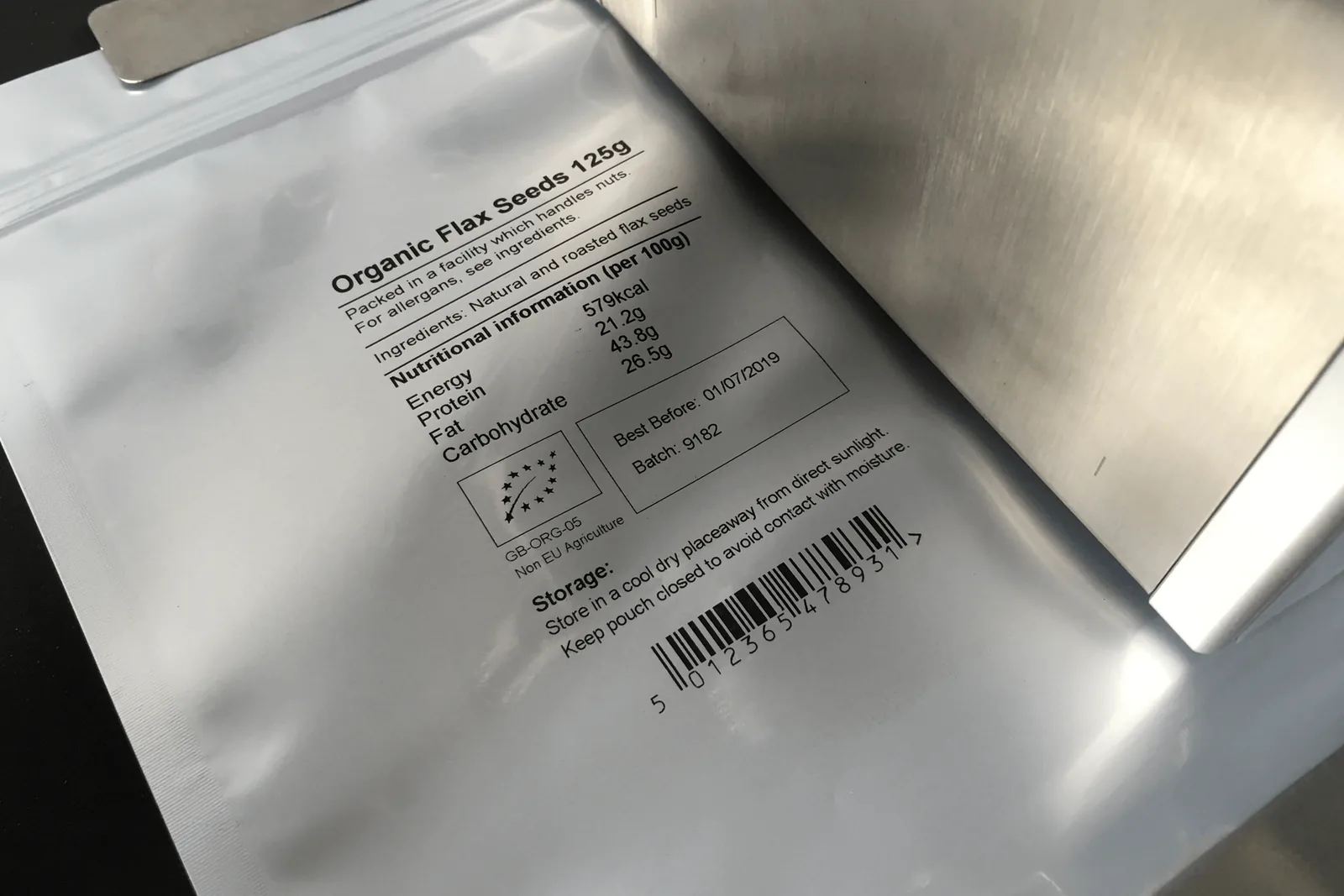
Inkjet and alternative coding solutions for stand-up pouches, bags, labels, sleeves and flexible packaging lines.
View details →Yes. TIJ is commonly selected for high-resolution barcode and QR code printing where the surface and print distance are controlled.
TIJ systems use cartridges, which makes handling cleaner than traditional bulk ink systems. Ink type still needs to match the surface and drying requirement.
Yes. TIJ can be integrated to label applicators, label feed systems and carton handling equipment where the label or pack is presented consistently.
TIJ uses replaceable cartridges to produce high-resolution variable print. It performs best when the product is guided consistently and the printhead can be held close to the surface without impact.
Confirm the permitted throw distance for the chosen cartridge and resolution. Product movement, flexible packs, raised seams and guide-rail variation can move the surface outside that window, so the mounting needs fine adjustment and impact protection.
Water-based inks are commonly considered for porous materials, while solvent or specialist cartridges may be needed for coated or non-porous surfaces. Compatibility, dry time, contrast and shelf life must be checked against the exact cartridge and pack.
TIJ can suit fine text, logos, linear barcodes and 2D codes, but resolution alone does not guarantee a readable symbol. Module size, quiet zone, contrast, product motion and printhead alignment all affect the result.
Lancing's current first-party product information lists the LUDC127 as a conveyor-mounted cartridge inkjet reference. The values below are configuration-dependent and must be confirmed for the exact head, cartridge, conveyor and application quoted.
| Model reference | LUDC127 |
|---|---|
| Print-height options | 2–12.7 mm, 2–25 mm or 2–150 mm |
| Resolution options | 150, 300 or 600 dpi |
| Reference print distance | 2–3 mm |
| Product detection | Photoelectric sensor |
| Reference conveyor output | Approximately 5–20 products per minute, product-dependent |
| Belt size | 1500 × 190 mm reference belt |
| Power supply | 110/220 V, 50–60 Hz |
| Head configuration | Multi-head arrangements available subject to application review |
Reference data: Lancing high-speed online inkjet printer. Final specification is confirmed on the quotation and approved sample trial.
| Risk | Why it matters | Practical control |
|---|---|---|
| Variable print gap | Can reduce sharpness, alter code size and cause missed nozzles or unreadable symbols. | Guide the product, stabilise flexible material and use an adjustable protected mount. |
| Wrong cartridge | Ink may not adhere, dry or resist handling on the production pack. | Approve the exact cartridge by sample test and control purchasing by part number. |
| Uncontrolled message entry | Correct print quality can still produce the wrong date, lot or product code. | Use recipes, permissions, prompted fields or data download with a defined approval check. |
| Barcode only read once | A scanner read does not prove consistent quality across normal production. | Agree sampling, inline inspection or formal verification according to the business requirement. |
The permitted distance is cartridge and model-specific. The LUDC127 reference information lists 2–3 mm, but the final value must be confirmed for the chosen configuration and proven on the production pack.
Compare cartridge price together with usable ink volume, message coverage, resolution, purging or wiping losses, shelf life, change frequency and operator time under the same production assumptions.
It can where the selected controller and software support the required connection. Define field mapping, record sequencing, validation, buffer behaviour and the response to missing or duplicate data.
Consider CIJ where the product is curved, fast or difficult to guide; large-character inkjet for direct case marking; and thermal transfer overprinting for high-quality coding directly onto moving flexible film.
Send representative packs and the full message so the cartridge, mounting and code quality can be trialled together.
Request a TIJ trial review